
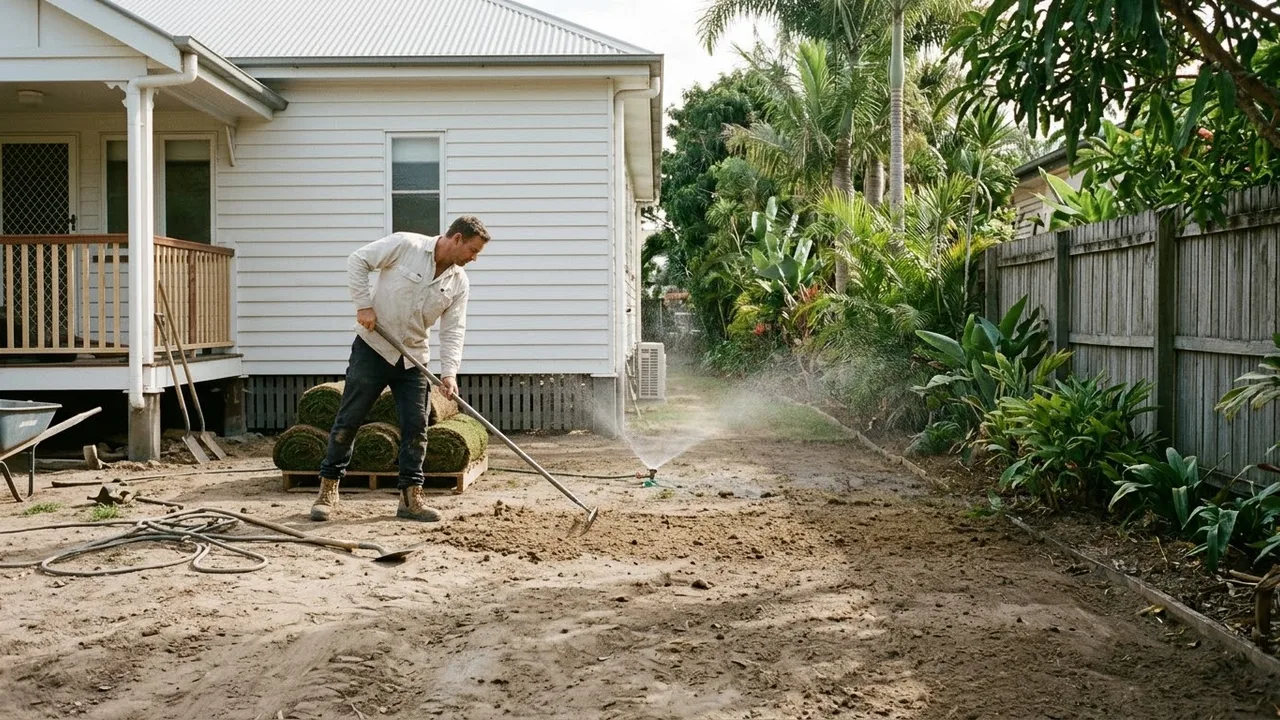
Turf Installation in Merrimac: Synthetic Turf for Wet Ground
A Merrimac lawn that turns to mud after every storm needs a firm, drained base before any turf goes down. Share your suburb and yard size to start a measured quote.
Turf installation in Merrimac works best as synthetic turf over a firm, drained base, because low, wet ground beats natural grass. Natural lawn on a floodplain block tends to go boggy after a storm and thin out in the shade. The aim is a lawn with no mud walked through the house after rain.
Turf installation in Merrimac: what lawn suits wet ground
Artificial grass suits wet, low-lying yards because it does not rely on the soil underneath to stay alive. Natural lawn needs soil that drains and sun that reaches it. On a block where water sits after rain, the roots stay waterlogged and the lawn turns to mud. Under a tree or beside a fence, it often dies off altogether.
Synthetic turf swaps that for a built base. Water passes through the turf and the layers beneath it instead of pooling on top. You stop mowing and watering, and the dog has nothing to dig up and carry inside.
A qualified installer confirms the choice on site. Ground level, shade, how the yard falls and how the family uses it all change the answer. A small courtyard behind a townhouse is a different job from a full backyard with a dog run.
How the base is built on floodplain blocks
The base is where the work goes first, because it decides whether the lawn stays level. On soft, low ground the installer removes the old lawn and topsoil, then excavates to a set depth. Crushed rock is laid and compacted in layers so it does not settle later.
Drainage matters more here than on a hillside block. The base needs a fall so water moves away from the house and does not sit under the turf. Where the yard is very flat or the soil holds water, the installer may recommend drainage work before any turf goes down.
This is the answer to a common worry, a base that sinks or puddles after a storm. A sinking middle on a builder-laid lawn usually points to a thin or poorly compacted base. The installer confirms the cause when they see the yard.
Artificial grass pile height, roll width and play areas
For a backyard with kids, a 40mm pile over softfall feels soft underfoot, and 4m rolls cut the joins so the lawn reads as one surface from the deck. A 30mm or 35mm pile suits a tidy front yard or a putting green, and 2m rolls handle a narrow courtyard.
A UV rating on the turf matters, because without it the blades can fade and turn brittle in Gold Coast sun. Where the lawn runs up to a barbecue, keep the barbecue itself on the paving.
Synthetic turf does get warm in direct summer sun. Shade, the product chosen and how the yard is used all affect how warm it feels on bare feet, so it is worth talking through before you commit.
What a turf quote covers
A proper quote is measured to your yard, not guessed from a description. It sets out the turf, the base preparation and the removal of the old lawn, with a clear price per square metre before any digging starts. The quote also sets the finish date for the job.
If drainage, paving or irrigation is part of the work, a licensed trade does it, and the quote should say who holds the licence.
A large backyard costs more than a small courtyard, and access matters too. A narrow side path to the backyard can change how the old lawn and base material are moved.
Can you buy the turf and lay it yourself?
You can, but the turf is the easy part. Most of the effort and most of the risk sits in the digging, the compaction and the falls in the base. On wet ground a base laid without the right equipment tends to dip within a season, and the dips hold water. An installer brings a plate compactor and the know-how to get the levels right the first time.
Merrimac homes, from Merridown Drive to Lakelands Drive
Merrimac sits on the floodplains in the central part of the city, and the suburb is low-lying. That low ground is why drainage comes before turf on a Merrimac yard.
The housing mix changes the job from street to street. Established detached houses around Merridown Drive and Jura Parade sit alongside more compact early-1990s homes near Highfield Drive. Townhouse courtyards off Ghilgai Road can be reached only through a garage or a narrow gate, so the old lawn and base rock may have to go out by barrow. The larger golf-course residences on Lakelands Drive have more area to cover. Pockets of new development add fresh blocks of bare dirt.
On a low block near Gin House Creek, Boobegan Creek or Mudgeeraba Creek, the installer looks first at where water collects after rain: the low corner, the fence line and the foot of each downpipe.
Services in Merrimac
- Designer golf and putting greens Custom synthetic putting greens built into a backyard or commercial space, with drainage under the surface.
- Landscaping extras around new turf Levelling, drainage, edging and garden work around a new synthetic lawn so the whole yard finishes together.
- Artificial grass installation Synthetic lawns measured, excavated, based and laid for front yards, backyards and courtyards.
- Artificial grass supply and DIY turf Synthetic turf by the metre or full roll in 2m and 4m widths, with advice for DIY layers and trade buyers.
- Turf installation costs and quotes Installed turf priced per square metre, with base prep, old lawn removal and access worked into one quote.
- Pet-friendly artificial turf Hard-wearing synthetic grass for dog yards, laid on a drained base so paws stay clean after heavy rain.
- Playground softfall and kids' play area turf Softfall matting and soft synthetic grass under swings and forts, so backyard tumbles land softer.
- Commercial and public area turf Low-maintenance artificial grass for offices, body corporate grounds and public areas under heavy use.
Frequently Asked Questions
How can I check a Merrimac turf installer's licence and ABN?
Get it priced
Patchy lawn, mud or bare dirt out the back? Tell us about your yard to request a turf quote.
Send us your turf details to request a measured, written quote.