Commercial Artificial Turf on the Gold Coast: Synthetic Turf Install
Commercial artificial turf on the Gold Coast keeps common areas green without a mowing contract. Worn paths or muddy entrance strips? Share the size and layout of your grounds for a measured quote.
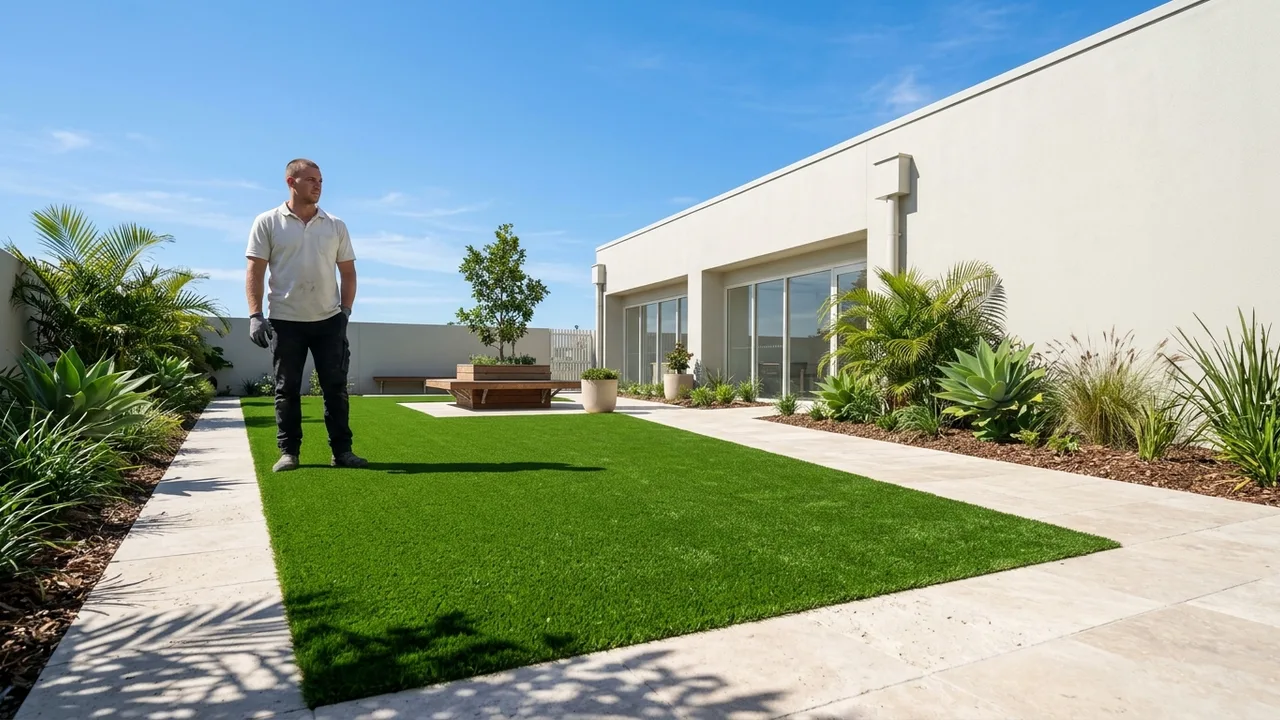
Synthetic turf gives office grounds, body corporate common areas and public spaces a lawn that looks the same in every season. There is no mowing roster, no watering and no bare patches where people cut across. The result depends on the base under the grass, so a good job starts with the ground and ends with the turf.
What is included
- Old lawn and surface removal Worn grass, weeds and soft soil are taken out so the new base sits on firm ground.
- Excavation, compaction and levelling A compacted, level base is what stops synthetic turf sinking under foot traffic.
- Drainage in the quote Water needs a path out after a storm, so falls and drainage are set out before the turf goes down.
- Turf supply and install Pile height and density are chosen for the foot traffic the area actually takes.
- Edges, joins and finishing Tidy edges and tight joins keep the surface looking neat in a place the public sees.
How it works
-
Measure the site
The area, access and the way the ground falls are measured on site, so the quote reflects your grounds.
-
Set out the price
Turf, base preparation and old surface removal are best priced as separate lines, each with a rate per square metre.
-
Prepare the base
The old surface comes out, then the ground is excavated, compacted and shaped for drainage.
-
Lay and finish
The turf is rolled out, joined and edged, then brushed so the pile stands up evenly.
Commercial artificial turf on the Gold Coast: where it earns its keep
Artificial turf suits any ground that needs to look tidy but costs too much to keep alive as real grass. Shaded courtyards, strips between buildings and entrances where people walk the same path every day are the usual candidates.
Body corporates often carry a mowing bill for small, awkward patches. Offices want a clean frontage. Schools, early learning centres and resorts want a safe, green surface that survives constant use. Each of these has one thing in common: the lawn is judged by how it looks on its worst day, and synthetic turf over a sound base stays far more even through heavy use and dry spells than real grass.
Why the base matters more than the grass
A common area that gets walked on all day will show a weak base within months. The turf itself does not sink. The ground under it does.
The installer excavates the old surface, compacts the base in layers and shapes it so water runs away rather than pooling. Summer storms make this step important on the Gold Coast, because loose ground and standing water both let a surface go soft.
Sandy or soft ground can shift under load. An installer can assess the ground and its fall on site before settling on the base preparation and drainage.
Where the job includes drainage or paving changes, licensed tradespeople do any regulated work. Getting this stage right is what keeps the surface level for years.
Synthetic turf and the Australian climate
Strong sun is what fades cheap pile, so UV protection matters most on open ground such as a forecourt, a pool-side strip or a rooftop lawn. Turf made for Australian conditions carries that protection in the blades, which helps the colour hold across many summers.
Surface heat is the other point for a commercial site. Artificial turf warms in direct sun, as paving does. If people sit or wait on the lawn, place seating in shade or under a canopy, and keep the unshaded runs for walking, where nobody lingers on the surface.
Artificial grass compared with a mowing contract
Real grass needs mowing, watering, feeding and patching, and it still thins out under shade and foot traffic. Over time the contract cost repeats while the lawn declines.
Artificial grass costs more at the start, because the base work is part of the job. After that, upkeep is occasional brushing and clearing leaves. For low-maintenance grounds, that trade is often the point: one planned job instead of a standing bill.
A committee or manager can set that one-off figure beside what the grounds cost to keep each year now.
Choosing pile height and product for public areas
Pile height is the length of the grass blades, and it changes how the surface looks and wears. Common options sit at 30mm, 35mm and 40mm, and rolls come in 2m and 4m widths. Wider rolls mean fewer joins across a large lawn, which tidies the finish.
A busy entrance path usually suits a dense 30mm pile that stands up to constant footsteps. A 40mm pile reads softer in a seating courtyard that sees lighter use. Play zones can use softfall options so falls are cushioned.
Products range from budget grades to premium turf, and the installer matches the grade to the traffic your grounds see.
What shapes the cost of a commercial turf job
Cost follows the size of the area, how much old surface must come out, the drainage needed and the product chosen. Access matters too, since a tight courtyard takes more labour than an open yard.
Base depth is the other big driver. Soft or sandy ground often needs more excavation and compaction before it will hold a firm, level surface, and that adds labour and material. It is also why two areas of the same size can price differently.
Mistakes to avoid with commercial turf
Buying turf without a proper base is the costly one. The surface sinks, puddles and needs lifting. Choosing on price per roll alone is another, because base work is where most of the labour sits.
Laying turf over old lawn or soft soil also fails. A good installer will say so plainly.
Commercial and public area turf options
- Body corporate common areas Courtyards, strips beside units and shaded patches where grass struggles and mowing is a recurring cost.
- Office and workplace grounds Entrances, break-out areas and rooftop or courtyard lawns that need to look presentable every day.
- Public area turf Parks, verges and shared spaces that take heavy foot traffic and need little upkeep.
- Play and softfall areas Softfall options for play zones in schools, early learning centres and resorts.
Commercial and public area turf across the Gold Coast
Frequently Asked Questions
How much does commercial turf for a gym or training area cost on the Gold Coast?
How do I choose a commercial artificial turf company on the Gold Coast?
How do I replace worn artificial grass in a common area?
Get it priced
Patchy lawn, mud or bare dirt out the back? Tell us about your yard to request a turf quote.
Send us your turf details to request a measured, written quote.