Pet-Friendly Artificial Grass on the Gold Coast
A dog-friendly synthetic lawn can reduce muddy paws and bare patches. It starts underneath, with a firm base that drains.
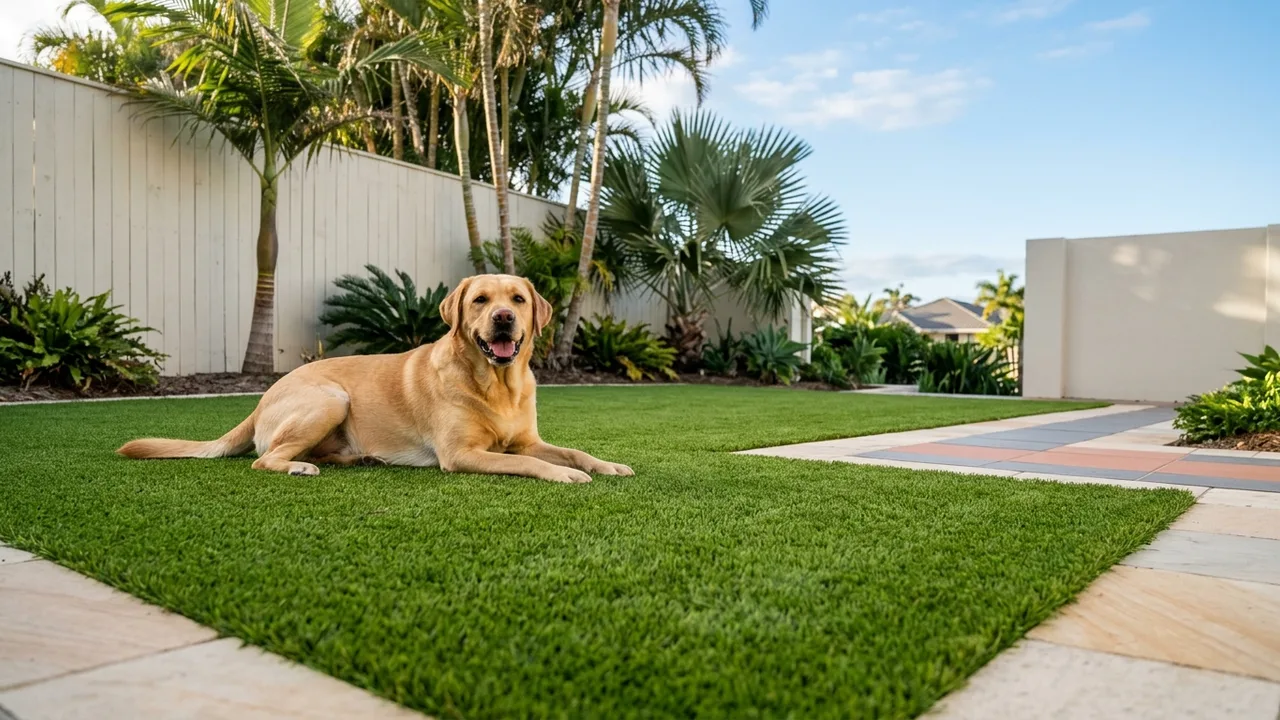
Pet friendly artificial grass on the Gold Coast can hold up to a dog when the base drains, the pile can take daily running and the surface hoses clean. It gives paws a surface without exposed soil to churn into mud.
What is included
- Old lawn and dirt removal Worn grass, roots and boggy topsoil have to go first, or the new turf sits on a surface that keeps moving.
- Excavation and compacted base A firm, level base stops the middle sinking where the dog runs and the corners lifting where it digs.
- Drainage under the turf Water needs a way out through the base, so rain and hosing do not leave puddles or a damp smell.
- Pet-grade turf and seams Pile height, backing and joins are chosen for claws, sprinting and daily toileting.
- Edges and fence lines Secure edges give a digging dog nothing to grab, especially along the paths dogs wear in.
How it works
-
Measure the yard
The installer works out the square metres, the access for machinery and how the ground falls, so the price is based on your yard.
-
Strip and dig out
The old lawn and soft topsoil come out, and the area is excavated to the depth the base needs.
-
Build and compact the base
Base material is laid, levelled and compacted, with drainage set so water leaves the yard instead of sitting under the turf.
-
Lay, join and fix the turf
Rolls are cut to fit the yard and joined where sections meet. The installer finishes the turf against the fence and garden beds.
Pet friendly artificial grass on the Gold Coast: what a dog yard needs
A dog puts a lawn through the same jobs every day: sprinting the fence line, digging at a favourite corner and toileting in one spot. Natural grass loses that contest, and the bare patches turn to mud after the next storm.
Synthetic turf copes because there is no soil surface to churn up. Paws land on pile that springs back, and rain passes through the backing into a prepared base. Laid on a properly drained base, it stays green and even through the wet season and the dry.
How the lawn ages is decided below the surface, where the compaction and drainage sit.
Why the base matters under a dog yard
A base is the compacted layer of crushed material the turf rests on. Under a dog yard it carries more load than under a front lawn, because the same few paths get run over again and again.
Sandy coastal soil and canal-side blocks both need thought. Loose ground settles unevenly if it is not dug out and compacted, and low spots hold water if the fall is wrong. The installer reads the slope and the soil on site, then sets the depth and drainage to suit.
This is also where a builder-laid lawn that sinks in the middle tends to go wrong. Thin or uncompacted base material gives way under repeated traffic, and the fix means lifting the turf and rebuilding underneath.
Keeping the lawn mud-free and fresh
Mud stops because the surface is no longer soil. Rain drains through the backing, so paws come off the turf dry or only damp, and the hallway stays cleaner.
Smell is a drainage and cleaning question. Urine passes through to the base, so a free-draining base matters, and a regular hose-down washes the surface. Pet-grade ranges are made with dogs in mind, and the installer can say what infill and cleaning routine suit your yard.
Solid waste is picked up as it would be on any lawn. A rinse afterwards keeps the turf fresh.
Choosing pile height and turf for dogs
Common pile heights run at 30mm, 35mm and 40mm. A shorter pile tends to stay tidier under fast paws and is easier to rinse. A taller pile feels softer underfoot and looks fuller from the house.
A 4m roll covers a wider yard with fewer seams. The shape of the yard also affects how the rolls are cut and joined.
A narrow dog run suits the shorter end of the range, while a family lawn where people sit and play barefoot suits the taller end.
Heat, salt air and strong sun
Synthetic turf in direct summer sun gets warmer than natural grass. Bare feet and paws feel it, especially on west-facing yards with no shade. A quick rinse cools the surface, and shade from trees, sails or a covered patio helps where the dog likes to lie.
Sun ages turf first, which is why UV-stabilised pile matters on an exposed Gold Coast yard.
Salt carried on coastal air settles on the surface as a fine residue, and it can build up in the pile and infill if it is never washed off. A regular rinse clears it.
If the yard is also a play area, softfall options can sit alongside the pet turf so children have a soft landing.
What a pet turf quote covers
A clear quote sets out the price per square metre, the old lawn removal, the base preparation and the turf itself before any digging begins. It is based on measurements taken at your yard, not a guess.
Some yards also need drainage, paving or irrigation changes. Where the job includes that work, it is done by someone appropriately licensed for it.
Buying turf and laying it yourself is possible, but the base is the hard part. Compaction, falls and drainage need the right equipment, and a mistake there shows up months later as a sunken patch.
Request a turf quote and include your yard size, what is there now and where water sits after rain.
Pet-friendly artificial turf options
- Dog run and side-yard turf Narrow strips and dog runs where paws wear a track and natural lawn gives up first.
- Whole backyard pet turf Full yard replacement for homes with one or more dogs, with drainage planned across the whole area.
- Pet turf with a kids' play area Pet-grade turf beside softfall options so children and dogs share the yard.
- Base rebuild for sunken turf Lifting an existing synthetic lawn that sinks or pools and rebuilding the base underneath.
Pet-friendly artificial turf across the Gold Coast
Frequently Asked Questions
What are the common problems with artificial grass for dogs and how do I avoid them?
What can I do when my dog's artificial grass sinks, pools or smells?
Can pet friendly artificial turf be repaired if the dog damages it?
Get it priced
Patchy lawn, mud or bare dirt out the back? Tell us about your yard to request a turf quote.
Send us your turf details to request a measured, written quote.