
Gold Coast Landscaping for Artificial Turf Installation
Lawn sinking in the middle, puddling after every storm or lifting at the edges? On the Gold Coast that usually starts below the surface, with the levels, base and drainage.
Landscaping artificial turf on the Gold Coast mostly happens before any turf arrives: the old lawn comes out and the ground is shaped so rain runs away from the house. That ground work decides whether the lawn still looks flat and tidy after the first big storm. Done together with the turf, it also means one finish date instead of three trades turning up on different weekends.
What is included
- Clearing the old lawn Dead grass, weeds and roots left under turf rot and settle, which leaves soft spots and dips.
- Levelling and falls A gentle slope away from the house stops water sitting on the surface after rain.
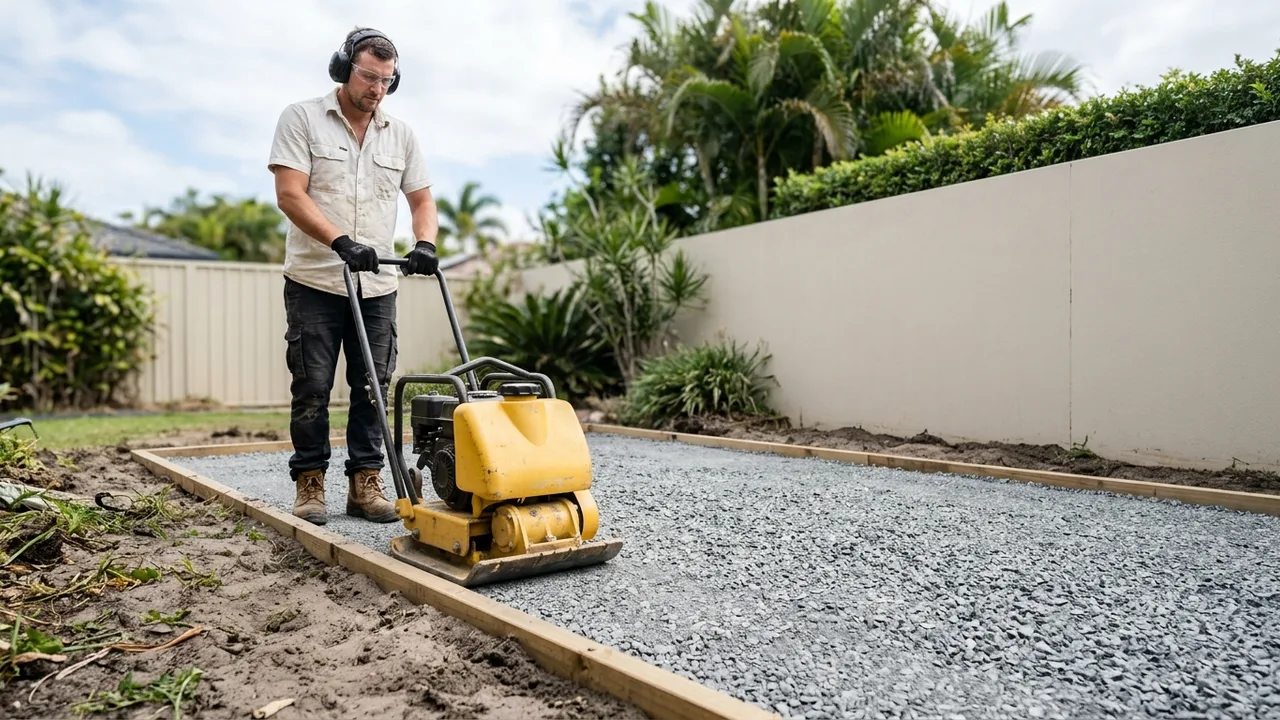
- Base and compaction A firm, compacted base is what keeps a synthetic lawn from sinking where you walk and play.
- Drainage under turf Water needs a path out of sandy or clay-heavy ground, or the base turns soft and puddles.
- Edging and garden beds Clean borders hold the turf edge in place and make the yard look finished from the street.
- Paving and irrigation links Pavers, pipes and sprinklers beside the lawn are priced alongside it, with licensed trades where required.
How it works
-
Measure the yard
The installer measures the square metres, checks access for machinery and looks at how the ground falls and what stands there now.
-
Set out the quote
Old lawn removal, levelling, base, drainage, edging and the turf itself are priced together, so the total is known before any digging.
-
Clear and level
The old lawn comes out, the ground is shaped to drain and the base is laid and compacted in layers.
-
Install the drainage and edges
Drainage, borders and any garden beds go in before the turf, so the lawn is never disturbed once it is down.
-
Lay the turf and finish
The turf is laid, joined and fixed at the edges, then the surrounds are tidied and the yard is ready to use.
Landscaping artificial turf on the Gold Coast: what sits around the lawn
A synthetic lawn is only the top layer. Underneath it is a base, and around it are edges, beds, paths and sometimes a fence line or a patio. Each of those affects how the lawn looks and wears.
On a bare yard after a new build, the work is mostly shaping the ground and building a base. On an older block, it usually starts with removing tired lawn, tree roots or old paving. Either way, doing the turf and the surrounds as one job means the levels line up, so the turf finishes neatly against a path or garden bed.
Site preparation and levelling before the turf goes down
Levelling comes first because turf copies whatever is under it. A dip in the soil becomes a dip in the lawn, and a hump becomes a bump that shows in low afternoon light.
The installer removes the old grass and topsoil, shapes the ground so it falls gently away from the house, then spreads and compacts a base in layers. Compacting means pressing the material down firmly with a plate compactor so it cannot settle later. A base that is rushed or left loose is the usual reason a builder-laid lawn ends up sinking in the middle.
The exact depth and falls are confirmed on site once the ground is exposed.
Drainage under turf in sandy coastal soil
Sandy soil near the coast drains quickly, which helps, but it also shifts. Without a firm base, it moves under foot traffic and the surface goes uneven. Where the ground is heavier or sits low beside a canal or retaining wall, water can collect instead.
Good drainage under turf means the base lets rain pass through and the ground slopes toward a safe outlet. A yard that puddles after a storm usually has a flat or hollow base, and the fix is in the levels, not the turf.
If drainage involves pipes, pits or stormwater connections, that part belongs with a licensed drainage trade.
Edges, beds and paths to plan with the lawn
Edges are what stop a new lawn lifting at the sides. Timber, steel, concrete or paver borders hold the turf firmly and give a straight line where lawn meets garden.
Paved strips, a path to the clothesline or a pad for outdoor seating can be priced in the same quote. Building them before the turf arrives is far easier than cutting into a finished lawn later.
Synthetic turf for pets, shade and play areas
Synthetic turf suits yards where grass has given up. Under a tree or beside a tall fence, natural lawn thins out and turns to mud. Artificial grass stays green in those spots without mowing or watering.
In a yard used by dogs, drainage through the turf and base gives urine a path away from the surface and helps limit odours. A firm edge also helps keep the lawn in place where a dog digs. Kids' play areas can use softfall options. Pile heights of 30mm, 35mm and 40mm are available, and the right one depends on how the yard is used.
In summer, synthetic surfaces can feel warm underfoot in full sun, so shade and a lighter-coloured surround help.
Mistakes that make a new lawn sink or puddle
Most failed lawns fail below the surface. Laying turf straight over old grass, skipping compaction, or building a base with no fall for water are the mistakes that show up first. Lifted edges and visible joins follow when the ground and fixing were rushed.
The cheapest quote often leaves out the base work, which is the part you cannot fix without lifting the lawn.
Can you buy the turf and lay it yourself?
You can, and some people manage the laying. The difficult part is the ground. Excavating, getting the falls right and compacting a large base takes the right machines and a good eye for levels.
A sensible middle path is to have the installer prepare the base and edges, then lay the lawn as part of the same measured quote. Share your suburb, the rough size of the yard and what stands there now when you request a turf quote, and the installer can price it properly once they have seen the ground.
Landscaping extras around new turf options
- Edging materials Steel or timber suits a garden bed where the line needs to stay slim. Concrete or pavers suit a mower strip or an edge that carries foot traffic.
- Garden bed finishing Soil, mulch and planting along the lawn line, built to the same levels as the turf so water does not wash across it.
- Paths and seating pads A path set just below the turf line lets the pile sit flush, so nobody trips at the join and a mower runs straight across.
- Fence lines and retaining walls Finishing the turf neatly against fences and low walls, where falls and drainage outlets need the most care.
Landscaping extras around new turf across the Gold Coast
Frequently Asked Questions
How much does landscaping around artificial turf cost on the Gold Coast?
Who can prep the ground and lay new turf on the Gold Coast?
What mistakes should I avoid when laying turf in Australia?
Get it priced
Patchy lawn, mud or bare dirt out the back? Tell us about your yard to request a turf quote.
Send us your turf details to request a measured, written quote.